Meeting with Correspondence
Changwon Seongsan Art Hall, Changwon, Republic of Korea
26. November 2025 bis 12. Dezember 2025
Who am I
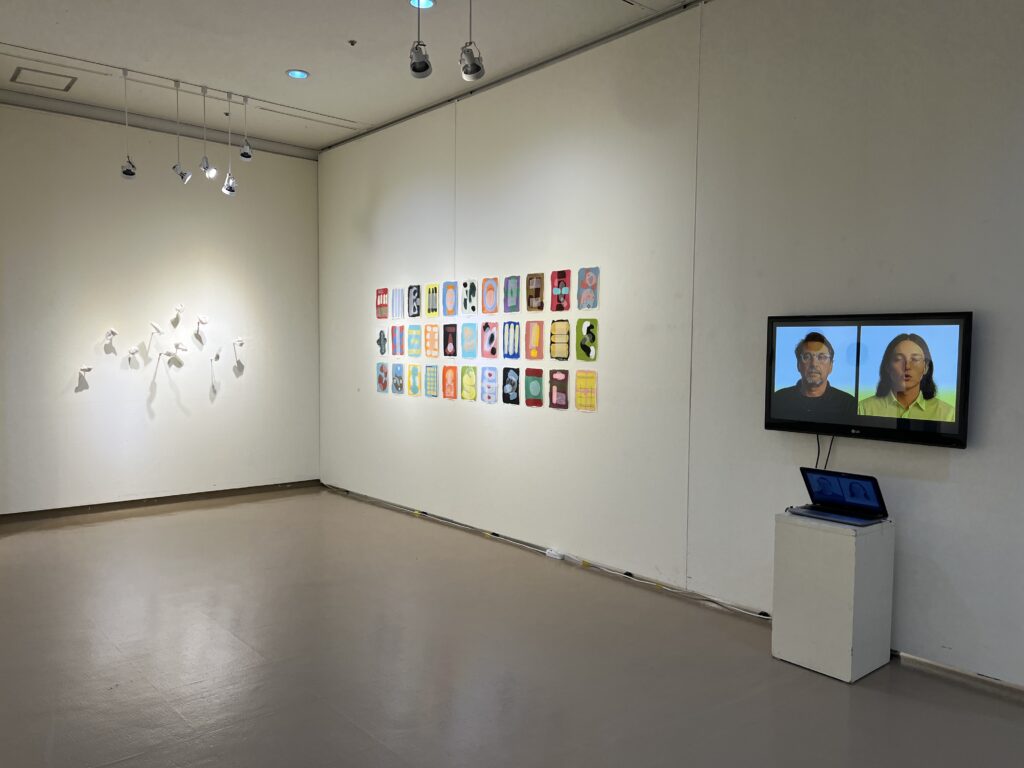
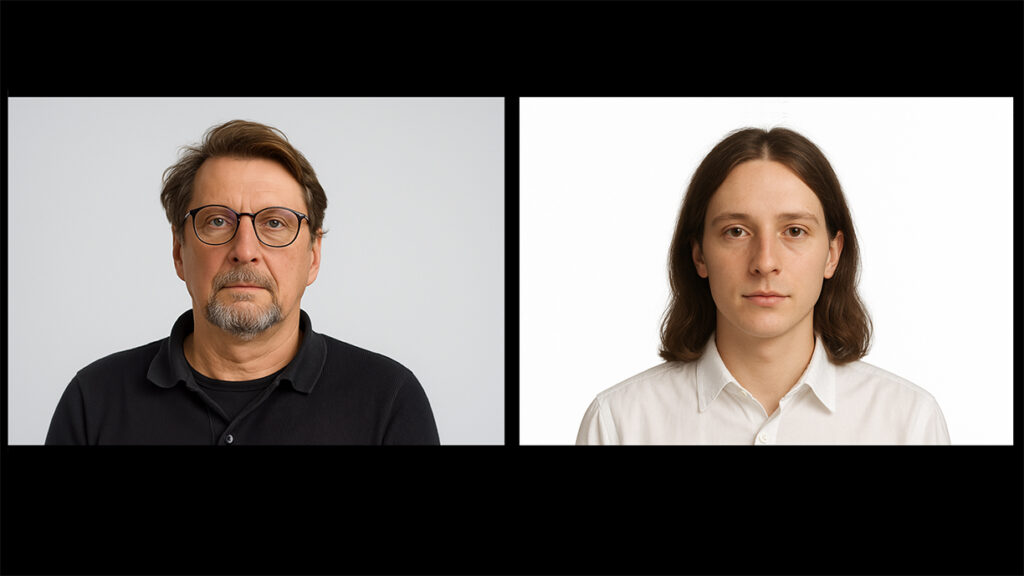
This work deals with the existence of God. The conversation arose from questions that the artist Michael Dörner conducted with ChatGPT in February 2025. He was interested in how an artificial existence (AI) would respond to questions about God and questions about its own identity and existence. He tried to understand how the AI responds and continually takes on the role of the questioner. The result was a dialogue that was not only about his own existence and the transfer from life to death, but also touched on profound philosophical questions. Questions that all people will probably ask themselves at some point in their lives. The dialogue took place in writing and was neither shortened nor corrected afterwards. The first version of this dialogue was exhibited as a pure audio file in three languages on golden USB sticks and with headphones in San Antonio in Ibiza.
In the summer of 2025, the English-language version of the interview was spoken by artificially generated avatars. The artist has his own film portrait appear as an avatar and speak through an AI-generated voice and for the ChatGPT voice an avatar was generated that resembles an androgynous Jesus figure. The film shows two faces side by side in an analogue conversation. It has the appearance of an online meeting.
Who am I
이 작품은 신의 존재에 관한 내용을 다룹니다. 대화는 예술가 마이클 도르너가 2025년 2월 ChatGPT와 진행한 질문에서 비롯되었습니다. 그는 인공 존재(AI)가 신에 관한 질문과 자신의 정체성 및 존재에 관한 질문에 어떻게 반응할지 궁금해했습니다. 그는 AI가 어떻게 응답하는지 이해하려 했으며, 지속적으로 질문자의 역할을 맡았습니다. 그 결과 탄생한 대화는 단순히 자신의 존재와 삶에서 죽음으로의 전환에 관한 것뿐만 아니라, 심오한 철학적 질문들까지 다루게 되었다. 아마도 모든 사람이 인생의 어느 시점에서 스스로에게 던지게 될 질문들이다. 이 대화는 서면으로 이루어졌으며, 이후 편집되거나 수정되지 않았다. 이 대화의 초판은 순수 오디오 파일 형태로 세 가지 언어로 제작되어 황금 USB 스틱과 헤드폰과 함께 이비자의 산 안토니오에서 전시되었다.
2025년 여름, 영어판 인터뷰는 인공적으로 생성된 아바타들이 음성으로 전달했다. 작가는 자신의 영화 초상화를 아바타로 등장시켜 AI 생성 음성으로 말하게 했으며, ChatGPT 음성을 위해 중성적인 예수상을 닮은 아바타를 생성했다. 영화는 아날로그 대화 속에서 나란히 놓인 두 얼굴을 보여준다. 온라인 회의 같은 모습을 하고 있다.
Cortex X
Serie von 10 Skulpturen, 2025
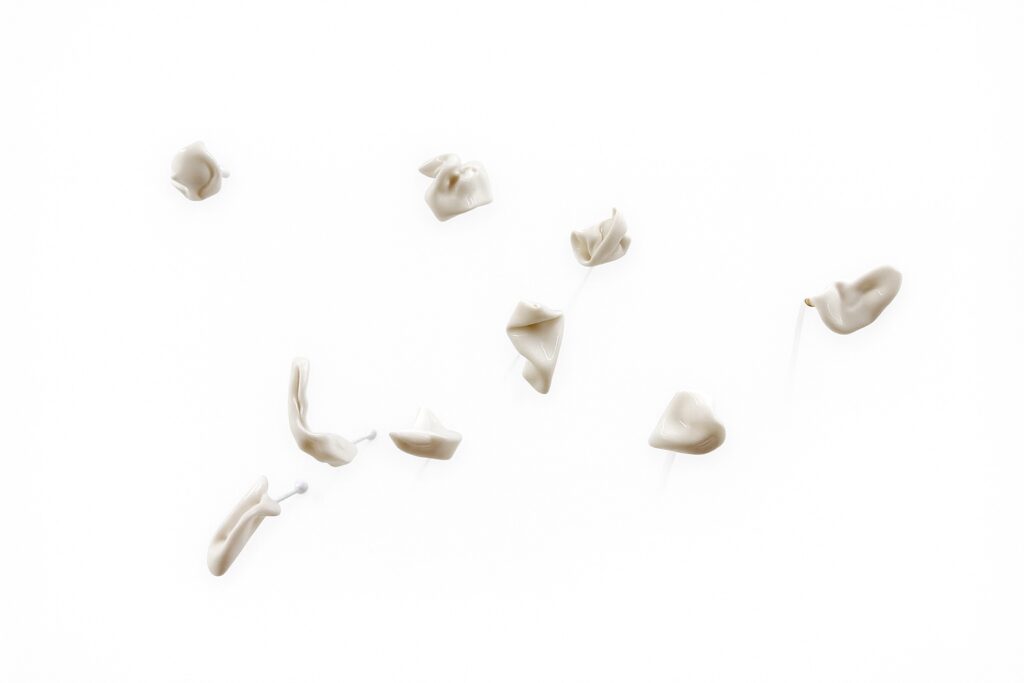
Die Werkgruppe Cortex X bezieht sich auf den Cortex (Hirnrinde) als funktionalen und strukturellen Träger kognitiver Prozesse. Die aus Kunststoff geformten Skulpturen greifen die gefaltete Morphologie des Gehirns auf und übersetzen sie in abstrahierte, organisch wirkende Körper. Dabei steht nicht die anatomische Reproduktion im Vordergrund, sondern die Falte als formales und konzeptuelles Prinzip. Die Skulpturen lassen sich als Momentaufnahmen eines permanenten Werdens lesen – als temporäre Stabilisierung eines instabilen Systems. Die glatte, lichtreflektierende Oberfläche verstärkt diesen Eindruck, indem sie die Formen zugleich betont und entzieht.
In philosophischen Kontexten wie etwa bei Gottfried Wilhelm Leibniz und später bei Gilles Deleuze (Le Pli) wird die Falte als Denkfigur verstanden, die Innen und Außen, Materie und Geist, Kontinuität und Differenz miteinander verschränkt. Die Falte markiert keinen Bruch, sondern eine kontinuierliche Umformung und eine Bewegung, in der sich Komplexität einschreibt, ohne eindeutig sichtbar zu werden. In diesem Sinne erscheinen die Skulpturen von Cortex X weniger als abgeschlossene Körper denn als verdichtete Zustände eines fortlaufenden Prozesses.
Durch die Montage an Metallgestängen lösen sich die Objekte von der Wand und treten in den Raum als einzelne, voneinander isolierte Einheiten. Diese räumliche Fragmentierung spiegelt die Logik des Gefalteten: Jede Skulptur ist Teil eines Kontinuums, ohne dieses vollständig zu repräsentieren. Wand, Träger und Objekt bilden ein relationales Gefüge, in dem sich Denken nicht abbildet, sondern räumlich artikuliert.
Cortex X versteht sich somit als skulpturale Untersuchung der Falte – nicht als Metapher des Gehirns, sondern als materialisierte Denkbewegung.
Cortex X
Series of 10 sculptures, 2025
The Cortex X group of works refers to the cortex (cerebral cortex) as a functional and structural carrier of cognitive processes. The plastic sculptures take up the folded morphology of the brain and translate it into abstract, organic-looking bodies. The focus is not on anatomical reproduction, but on the fold as a formal and conceptual principle. The sculptures can be read as snapshots of a permanent process of becoming – as a temporary stabilisation of an unstable system. The smooth, light-reflecting surface reinforces this impression by simultaneously emphasising and withdrawing the forms.
In philosophical contexts such as those of Gottfried Wilhelm Leibniz and later Gilles Deleuze (Le Pli), the fold is understood as a figure of thought that interweaves inside and outside, matter and spirit, continuity and difference. The fold does not mark a break, but rather a continuous reshaping and a movement in which complexity is inscribed without becoming clearly visible. In this sense, the sculptures of Cortex X appear less as self-contained bodies than as condensed states of an ongoing process.
By being mounted on metal rods, the objects detach themselves from the wall and enter the room as individual, isolated units. This spatial fragmentation reflects the logic of the folded: Each sculpture is part of a continuum without fully representing it. Wall, support and object form a relational structure in which thinking is not depicted but spatially articulated.
Cortex X thus sees itself as a sculptural investigation of the fold – not as a metaphor of the brain, but as a materialised movement of thought.
Cortex X
10점의 조각 작품 시리즈, 2025
Cortex X 작품군은 인지 과정의 기능적·구조적 기반인 대뇌피질(Cortex)을 주제로 삼는다. 플라스틱으로 성형된 조각들은뇌의 주름진 형태를 차용하여 추상적이면서도 유기적으로 보이는 형태로 재해석한다. 여기서 중요한 것은 해부학적 재현이 아니라, 형태적·개념적 원리로서의 주름이다. 이 조각들은 영속적인 변화의 순간을 포착한 것으로 읽힐 수 있다—불안정한 시스템의 일시적인 안정화 상태로. 매끄럽고 빛을 반사하는 표면은 형태를 동시에 강조하고 은폐함으로써 이러한 인상을 강화한다.
고트프리트 빌헬름 라이프니츠와 이후 질 들뢰즈(Le Pli)와 같은 철학적 맥락에서 주름은 내부와 외부, 물질과 정신, 연속성과 차이를 서로 엮는 사고의 도형으로 이해됩니다. 주름은 단절이 아니라 연속적인 변형과 움직임을 표시하며, 복잡성이 명확하게 드러나지 않으면서도 그 안에 새겨집니다. 이러한 의미에서 Cortex X의 조각들은 완성된 신체라기보다는 지속적인과정의 응축된 상태로 보인다.
금속 막대에 장착됨으로써 오브제들은 벽에서 분리되어 공간 속으로 개별적이고 서로 고립된 단위로 등장한다. 이러한 공간적 분절은 접힘의 논리를 반영한다: 각 조각품은 연속체의 일부이면서도 이를 완전히 대표하지는 않는다. 벽, 지지대, 오브제는 사고가 재현되지 않고 공간적으로 표현되는 관계적 구조를 형성한다.
따라서 Cortex X는 뇌의 은유가 아닌 물질화된 사고의 움직임으로서 주름에 대한 조각적 탐구로 이해된다.
Cortex X, 2026
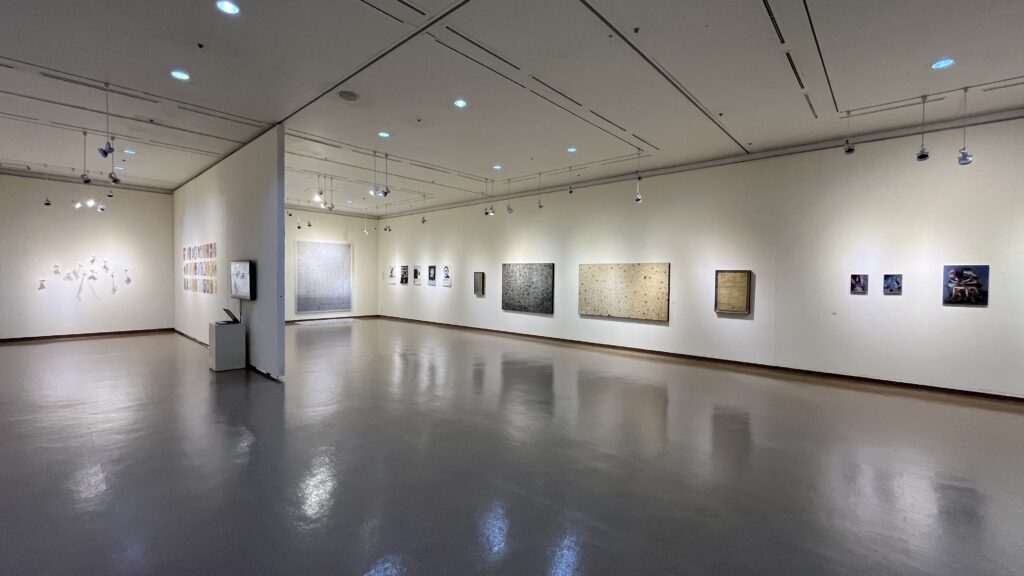
Installationsansicht, Changwon Art Hall, 2025